

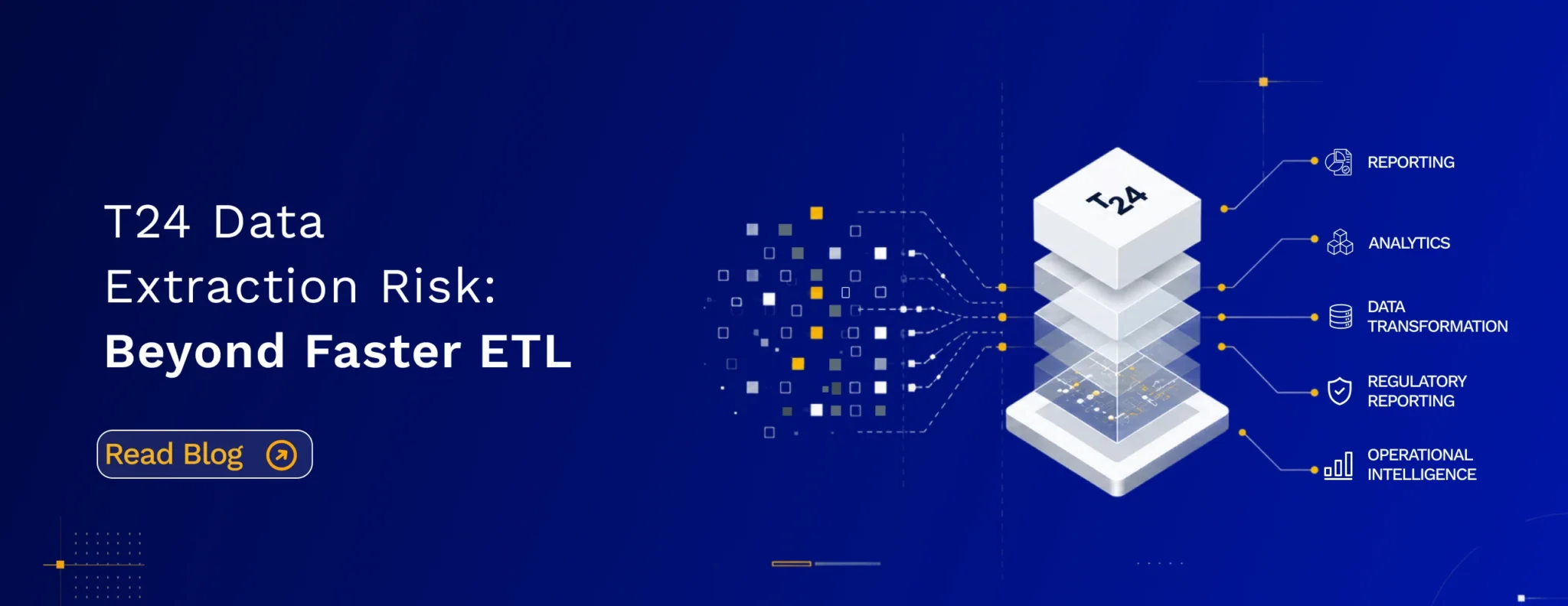
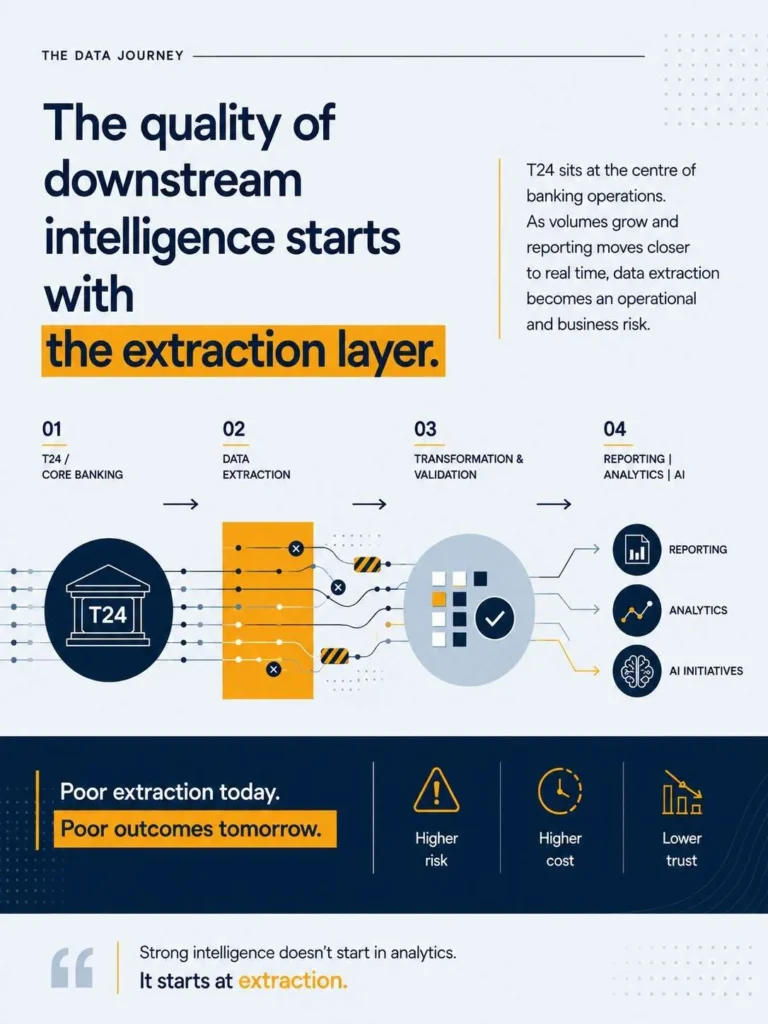
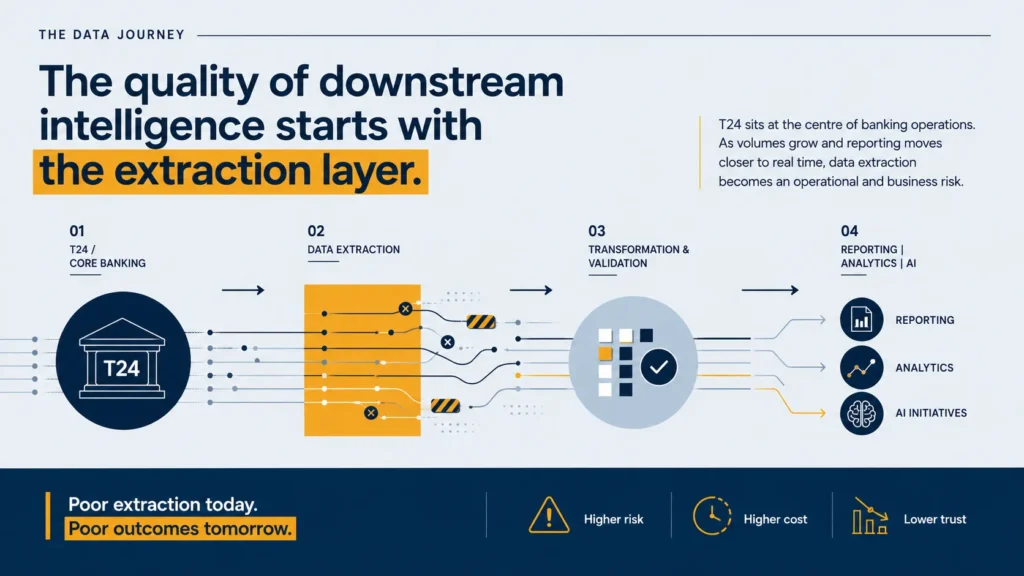
Temenos T24 sits at the centre of banking operations, but the value of its data depends on how reliably it can be extracted, transformed, and delivered to downstream systems.
As transaction volumes increase and reporting moves closer to real time, data extraction is no longer simply a technical task. It is becoming an operational and business risk.
Six Data Extraction Risks Banks Need to Address
1. Completeness
As T24 data volumes increase, extraction failures or incomplete processing can result in incomplete downstream datasets.
During COB cycles, processing tens or hundreds of millions of records makes data completeness increasingly critical.
2. Accuracy and Reconciliation
T24’s hierarchical and multi-value data structures require careful transformation into relational formats.
Manual or fragmented extraction logic can introduce inconsistencies between source transactions and reporting outputs, increasing validation and reconciliation effort.
3. COB and Processing Windows
Extraction performance directly affects the COB window.
When extraction becomes a bottleneck, reporting and downstream processes are pushed later into the business day. During peak periods, this can create additional operational pressure.
4. Operational Dependency
Custom SQL scripts and fragmented extraction processes can create dependency on specialist technical teams, increasing key-person risk.
As extraction environments become more customized, troubleshooting and maintenance can become increasingly difficult.
5. Upgrade and Change Risk
Changes to T24 applications, fields, or data structures can affect extraction logic.
Without structured mappings and timely detection of source changes, even small changes can create downstream issues across reporting and analytics workflows.
6. AI and Analytics Data Risk
AI and analytics initiatives depend on structured, consistent, and timely data.
If the foundational extraction layer is unreliable, downstream analytics and AI initiatives inherit those data-quality and timeliness challenges.
AI does not eliminate poor data. It makes the quality of the underlying data even more important.
When Data Extraction Risk Becomes Business Risk
These risks rarely remain inside IT.
Delayed or inconsistent data can affect regulatory reporting, finance, risk monitoring, and management decision-making.
The bigger issue is the gap between what is happening inside the core and when the business can confidently use that information.
Why Traditional Extraction Architectures Struggle
Generic ETL tools and custom extraction scripts can introduce additional processing stages, custom logic, manual intervention, and infrastructure overhead when handling complex T24 structures and growing data volumes.
As volumes increase, these dependencies can make extraction harder to scale and troubleshoot.
What a Modern T24 Data Extraction Layer Should Provide
A modern approach should combine extraction performance with data reliability, providing:
- T24-native application mappings
- Incremental and full-load processing
- Automated XML flattening and schema mapping
- COB-aware extraction sequencing
- Real-time data streaming where required
- Health monitoring and automated retry mechanisms
- Data validation and schema-drift detection
The objective is not simply to move data faster. It is to create confidence that the data reaching reporting and analytics environments is complete, consistent, and usable.
How 9X Helps
9X is a T24-native automated data engineering platform designed to reduce extraction complexity and operational risk.
It acts as a data gateway between T24 and relational environments, automating extraction, transformation, and streaming while providing visibility across the data pipeline.
9X supports COB-aware extraction, automated XML flattening, schema-drift detection, health monitoring, automated retries, and high-volume processing designed for 1.5 – 2M records per second, with a target of processing up to 2 billion records within 3 hours.
The strategic value of 9X is not simply faster extraction. It is reducing the data friction and operational risk between T24 and the systems that depend on it.
For banks, stronger extraction foundations mean more reliable reporting, analytics, regulatory processes, and future AI initiatives.