

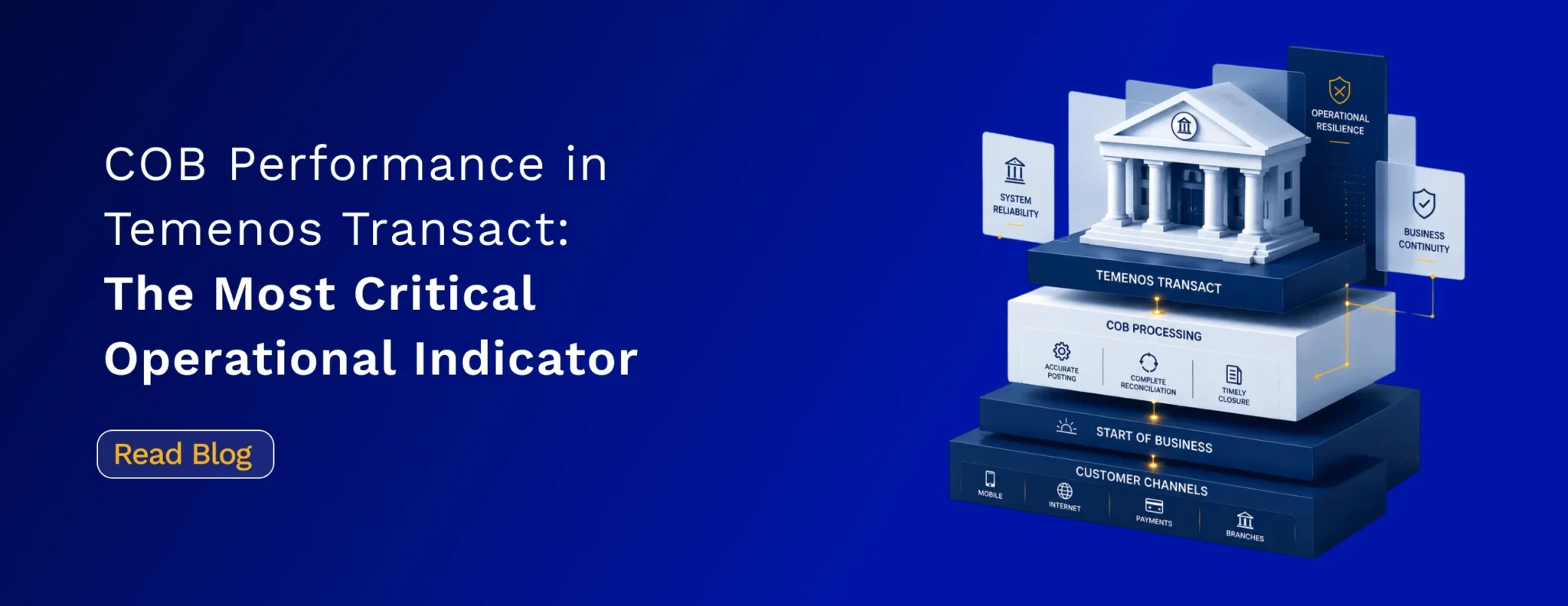
Banks no longer measure operational resilience solely by system uptime. They measure it by how consistently they can complete their Close of Business (COB) process. In a Temenos Transact environment, COB has evolved beyond an overnight batch process. It has become one of the most critical operational indicators, influencing transaction availability, regulatory reporting, digital banking readiness, and customer experience.
As banks expand their operations, launch new products, and process growing transaction volumes, COB performance increasingly determines whether the bank starts the next business day on time or carries operational risk into it.
Why COB Is More Than Just Batch Processing
COB is a coordinated sequence of financial postings, reconciliations, interest calculations, statement generation, accounting updates, and system validations. Every downstream operation depends on its successful completion.
A delayed COB can affect multiple business functions simultaneously, including:
- Start-of-day operations across branches
- Digital banking and payment channel availability
- Regulatory and financial reporting timelines
- Treasury and liquidity management
- Customer transaction processing
In today’s always-on banking environment, every additional minute spent in COB reduces the operational window available for business.
Why COB Performance Degrades Over Time in Temenos Transact
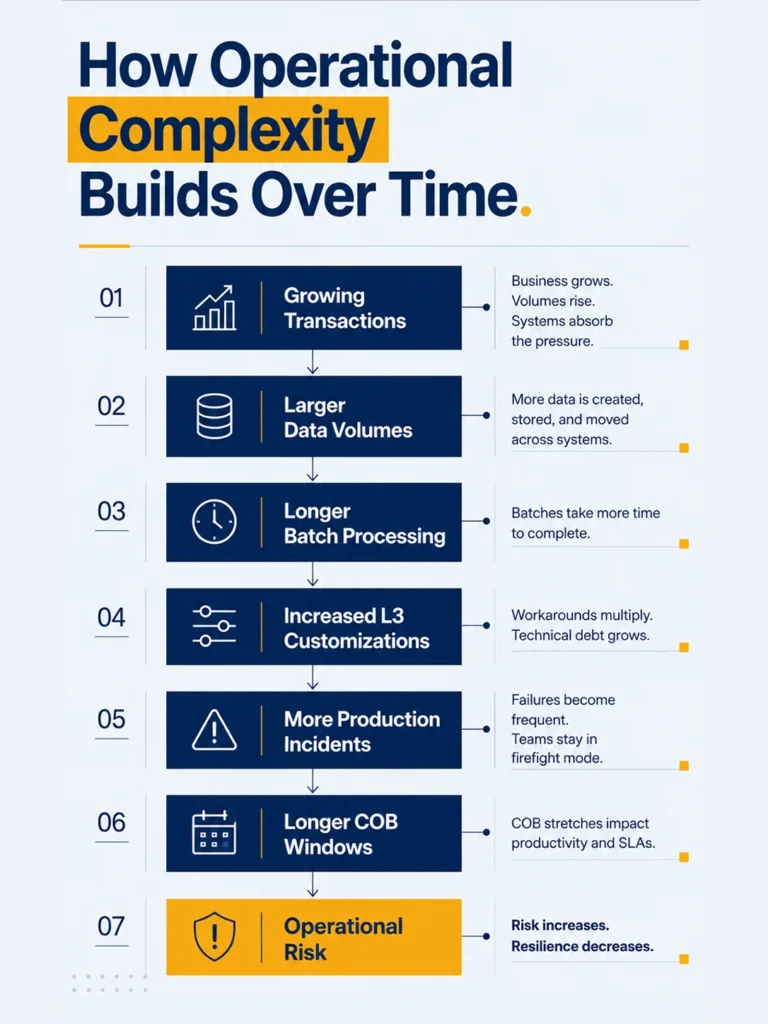
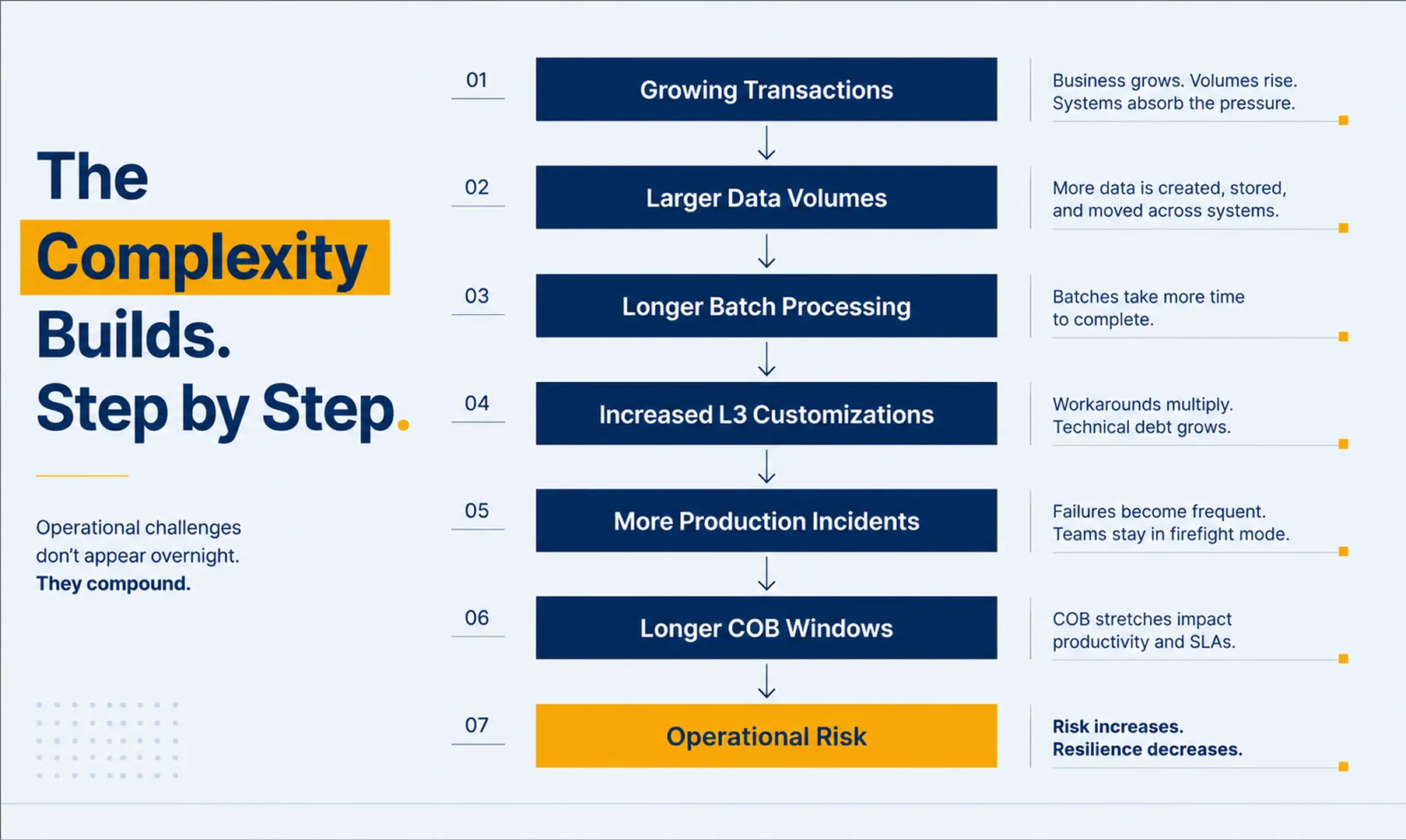
Many banks notice that COB durations gradually increase after implementation. The issue is rarely caused by a single component. Instead, it is the cumulative impact of operational growth and technical debt.
Common reasons include:
- Growing transaction volumes and expanding customer bases
- Large database tables that increase read and write operations
- Custom developments that introduce performance overhead
- Legacy batch sequences with unnecessary dependencies
- Inefficient parallel processing and under-utilized system resources
- Outdated database indexing and infrastructure configurations
Without periodic optimization, COB evolves from a predictable process into a recurring operational challenge.
The Business Impact of Longer COB Windows
A prolonged COB affects far more than IT operations. It directly influences business continuity and service delivery.
Banks often experience:
- Delayed opening of business operations
- Missed regulatory and financial reporting deadlines
- Reduced availability for digital banking channels
- Increased operational costs due to overnight support teams
- Slower product launches and change deployments
More significantly, persistent COB overruns reduce confidence in the bank’s ability to scale future business growth.
The Operational Challenges Behind COB Delays
Technology teams often spend more time responding to COB issues than preventing them.
Recurring operational challenges include:
- Manual monitoring of batch jobs
- Difficulty identifying performance bottlenecks
- Repeated production incidents during peak processing
- Lack of real-time visibility into COB progress
- Time-consuming recovery after failed jobs
These challenges increase operational risk while placing additional pressure on IT and business teams.
How Leading Banks Approach COB Optimization
Leading Temenos banks no longer view COB optimization as a one-time performance exercise. They treat it as an ongoing operational improvement program.
Their approach focuses on:
- Continuous COB profiling and runtime analysis
- Parallelising batch jobs while preserving processing dependencies
- Optimising database performance through indexing and partitioning
- Eliminating redundant batch routines
- Implementing real-time monitoring and automated alerts
- Regular performance benchmarking to identify emerging bottlenecks
This transforms COB from an unpredictable overnight process into a measurable operational capability.
Lera's Approach to COB Optimization
At Lera, COB optimization is approached as a combination of Temenos engineering expertise and performance governance, not just infrastructure tuning.
Our Core Banking Services help banks improve COB performance by profiling COB execution, analysing job dependencies, redesigning batch sequences, optimising database performance, implementing real-time monitoring, and addressing data growth and L3 customizations that affect long-term COB stability. We also address contributing factors such as inefficient customizations, growing data volumes, production incidents, and operational processes that silently impact COB performance over time.
Our approach has helped banks achieve measurable outcomes, including:
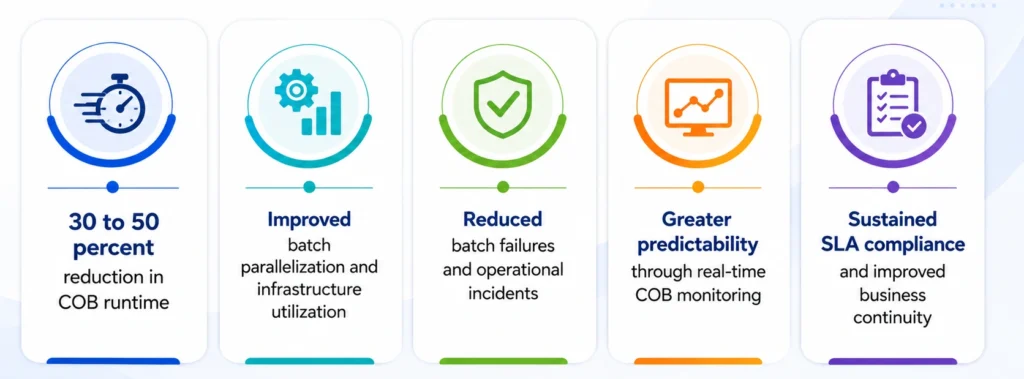
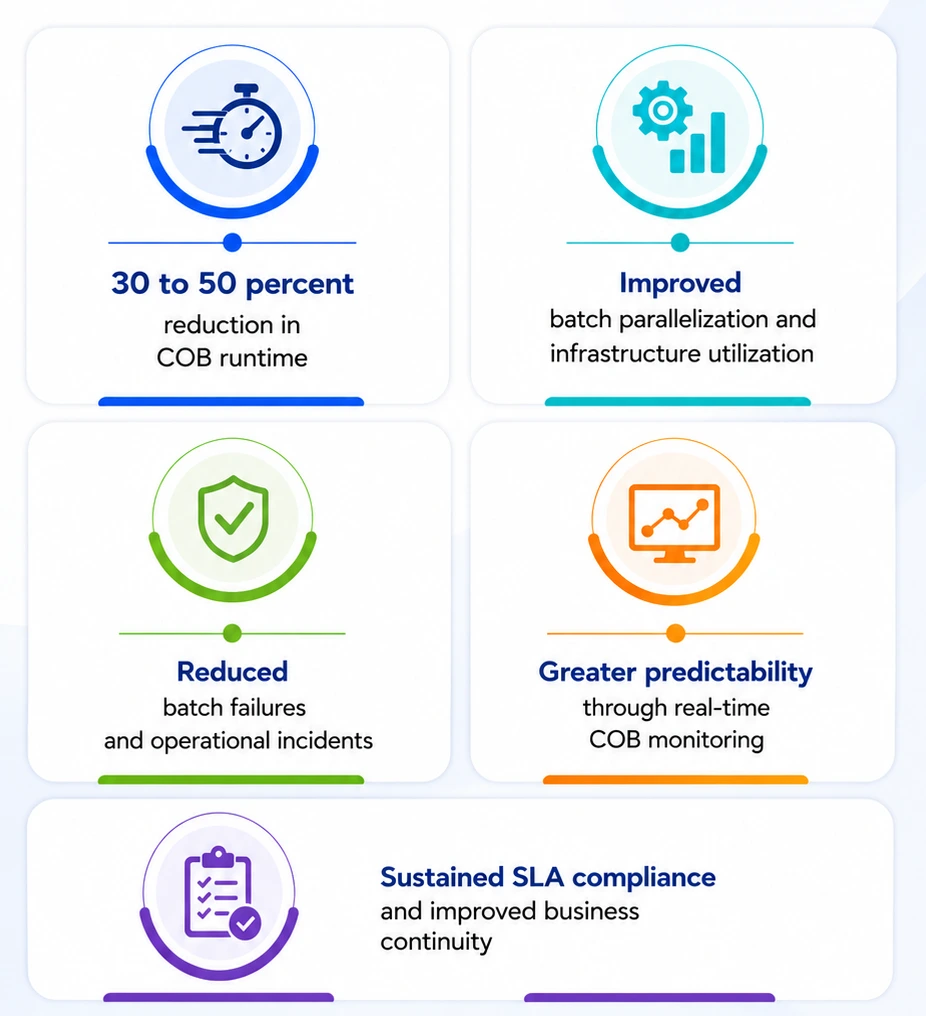
- 30 to 50 percent reduction in COB runtime
- Improved batch parallelization and infrastructure utilization
- Reduced batch failures and operational incidents
- Greater predictability through real-time COB monitoring
- Sustained SLA compliance and improved business continuity
As transaction volumes continue to rise and banking operations become increasingly digital, COB performance will remain one of the most important indicators of operational health. Banks that proactively optimize COB are better positioned to improve operational resilience, support business growth, and maintain predictable banking operations as transaction volumes continue to increase.