

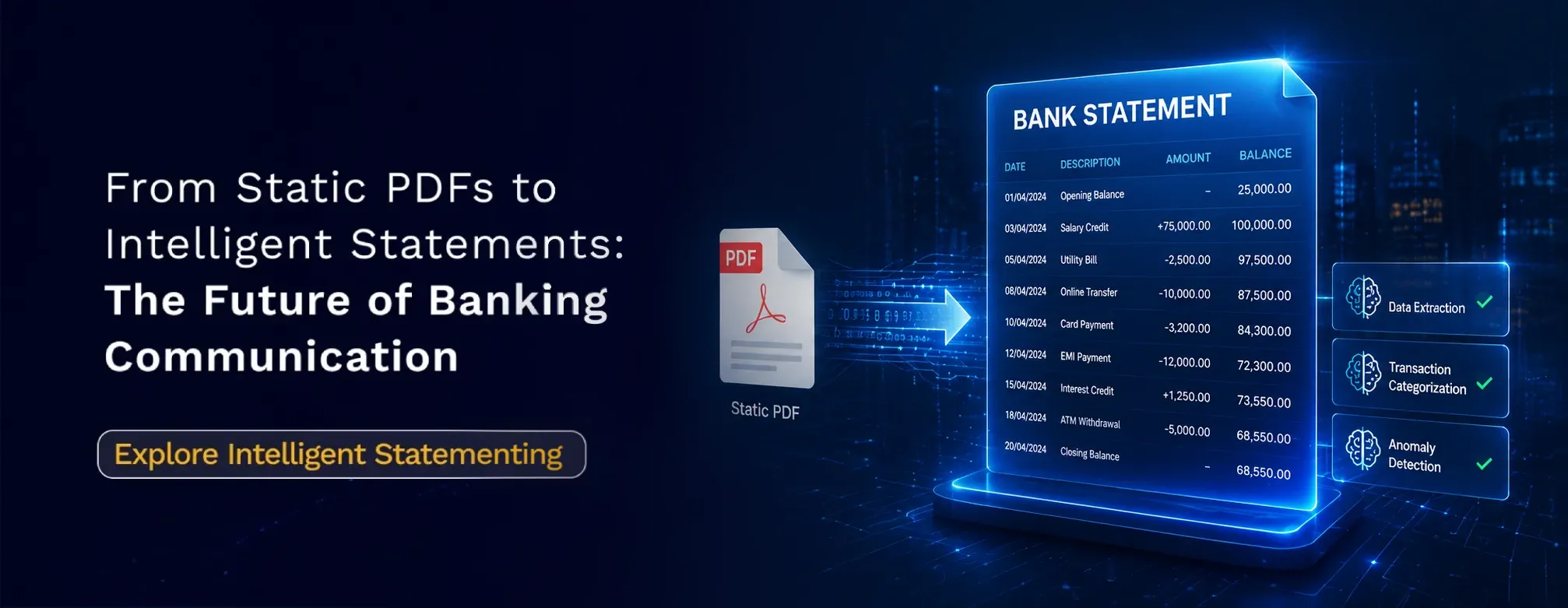
For decades, bank statements have served one purpose. They documented transactions, fulfilled regulatory obligations, and quietly landed in customers’ inboxes at the end of every month. While compliant, they rarely added value.
That expectation is changing. Today’s customers expect every interaction with their bank to be personalized, contextual, and easy to understand. A static PDF filled with technical transaction descriptions no longer meets those expectations. It answers what happened, but never what it means.
Banks now have an opportunity to transform statements from operational documents into intelligent communication channels that strengthen customer trust, improve engagement, and create measurable business value.
Why Traditional Statements Are Falling Behind
Most legacy statement platforms were designed for operational efficiency rather than customer experience. They rely on fixed templates, rigid delivery schedules, and technical transaction descriptions that often confuse customers instead of helping them.
The consequences extend beyond poor user experience. Operations teams spend valuable time managing template changes. Marketing teams cannot leverage statements for personalized engagement. IT teams remain burdened with even minor customization requests. Meanwhile, customers continue to receive documents that feel disconnected from their digital banking experience.
The problem is no longer the statement itself. It is the inability of legacy platforms to evolve with modern banking expectations.
Exclusive Offers for Webinar Participants
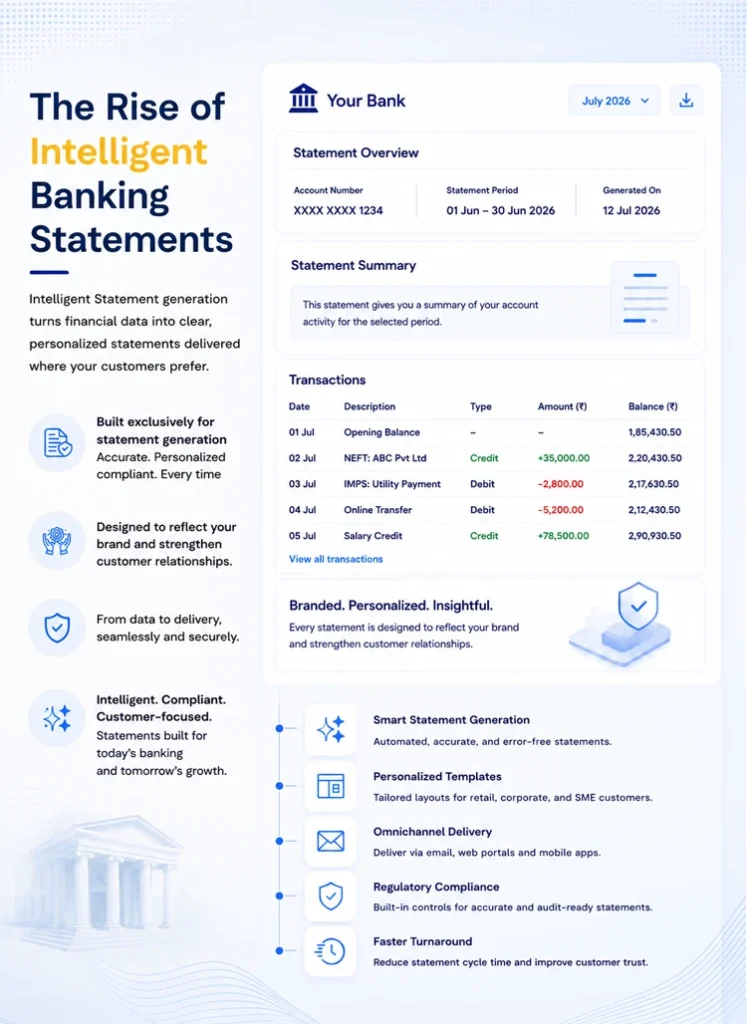
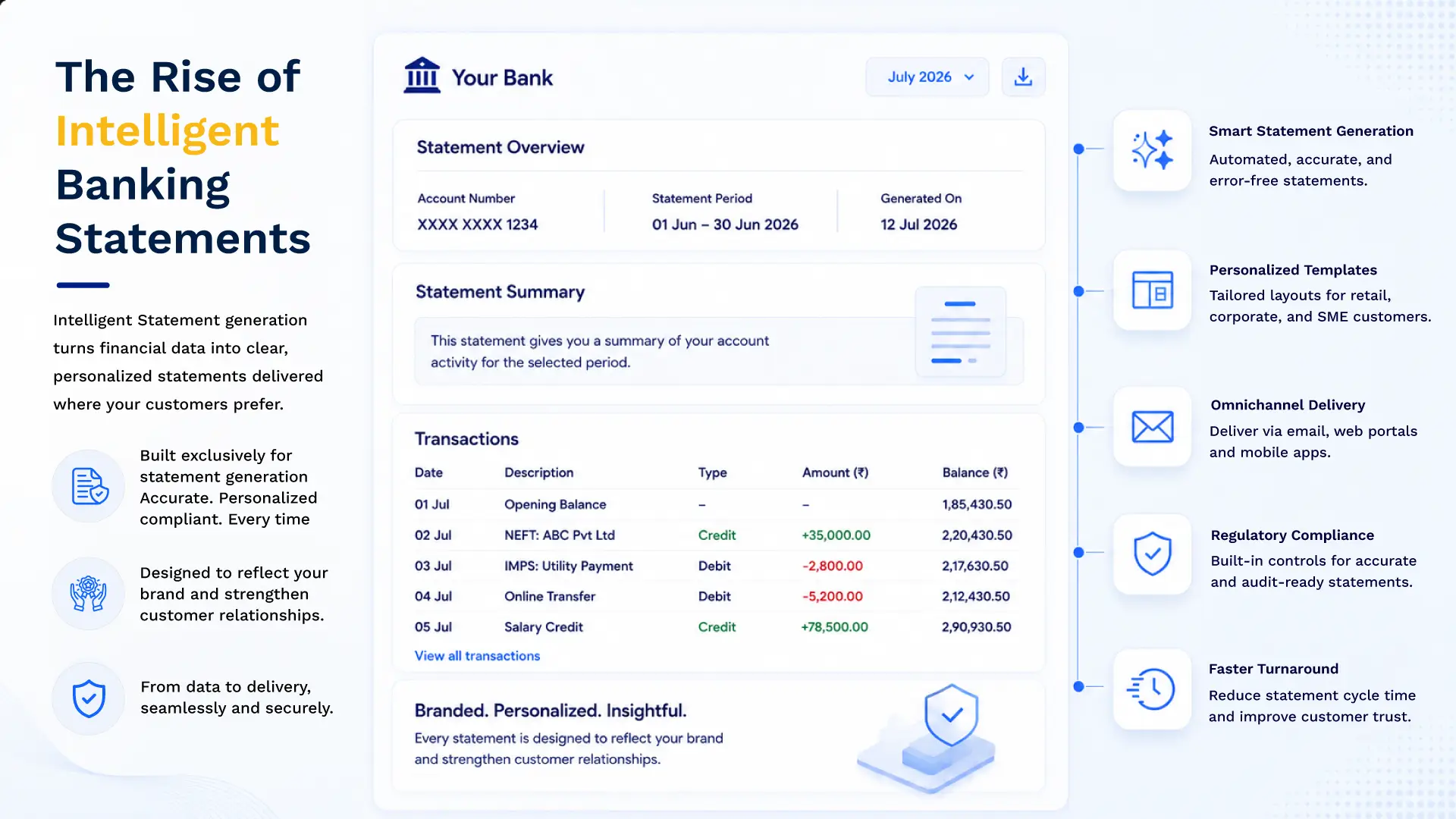
An intelligent statement goes beyond presenting financial data. It interprets information, explains transactions in plain language, delivers personalized insights, and reaches customers through their preferred digital channels.
Instead of static reports, customers receive dynamic financial experiences that help them better understand their finances.
Modern statement platforms are introducing capabilities such as:
- AI-generated summaries that simplify complex transaction descriptions.
- Interactive drill-down views across multiple accounts and products.
- Personalized templates for retail, corporate, and SME customers.
- Omnichannel delivery through email, web portals, messaging platforms, and mobile applications.
- Contextual product recommendations based on customer behavior.
- This evolution transforms a compliance document into an ongoing customer engagement opportunity.
How TransactIQ Is Redefining Banking Communication
TransactIQ has been designed around a simple belief. Every customer statement should create value, not just satisfy regulation.
Instead of relying on rigid templates, the platform enables banks to build highly customized statements through a drag-and-drop designer and a flexible data access layer. Banks can introduce new fields, redesign layouts, and launch new statement formats without lengthy development cycles.
Its AI-powered statement summarization converts technical core banking notations into clear, customer-friendly explanations. Rather than presenting cryptic transaction codes, customers receive meaningful narratives that improve financial understanding and reduce service queries.
TransactIQ also enables scheduled omnichannel delivery across email, messaging platforms, web links, and digital channels, ensuring customers receive statements when and where they prefer. Built for enterprise-scale banking operations, the platform supports high-volume processing while maintaining performance and reliability.
Looking ahead, capabilities such as “Talk to Your Statement” will allow customers to interact conversationally with their financial information, making statements even more intelligent and engaging.
What This Means for Banking Leaders
For CXOs, intelligent statements represent far more than a customer experience initiative.
They reduce operational dependency on IT through business-led customization. They improve customer engagement by delivering relevant, personalized communication. They create new revenue opportunities by embedding contextual offers directly within statements. Most importantly, they help banks differentiate in an increasingly competitive digital landscape without replacing their existing core banking platforms.
As banking becomes increasingly experience-driven, every customer interaction becomes an opportunity to build trust. Statements, once viewed as a compliance necessity, are becoming one of the most underutilized engagement assets available to financial institutions.
Banks that modernize this touchpoint today will be better positioned to strengthen customer relationships, improve operational efficiency, and create more meaningful digital experiences tomorrow.